10 Knee-Strengthening Exercises to Alleviate Pain and Boost Mobility
Kyle
11 min read
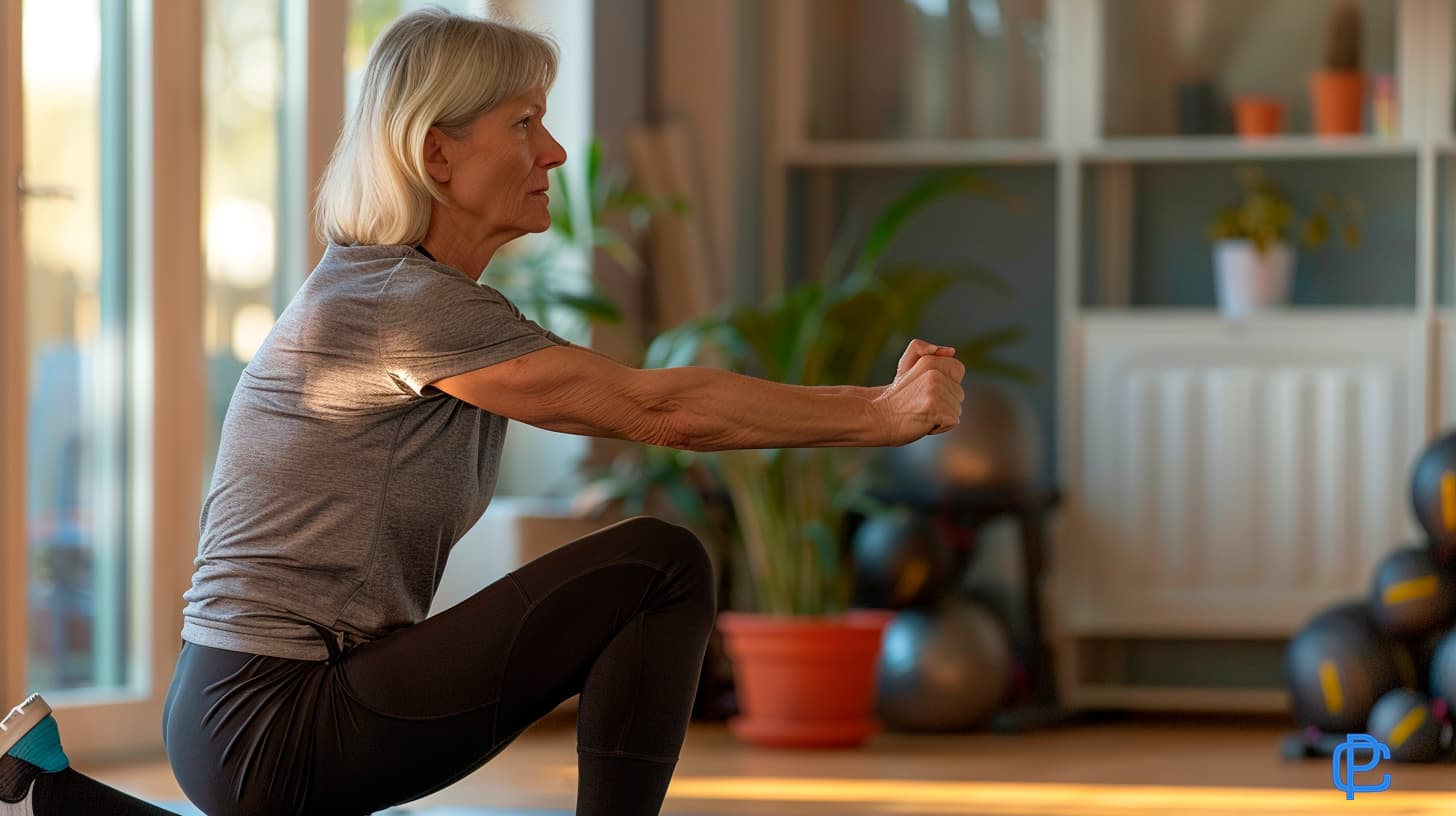
If you’ve ever heard the saying, ‘No pain, no gain,’ when it comes to strengthening your knees, there’s more to it than just pushing through discomfort.
These 10 knee-strengthening exercises hold the key to alleviating pain and enhancing your mobility.
As you explore each exercise designed to target different areas crucial for knee health, you’ll uncover a path towards regaining strength and flexibility.
Stay tuned to learn how these exercises can empower you to take charge of your knee health and move towards a more active lifestyle.
1- Double Knee To Chest
Perform the ‘Double Knee To Chest’ exercise consistently to relieve knee pain and enhance flexibility.
This exercise targets the quadriceps and hip flexors, crucial muscles for knee health. Start by lying on your back with legs extended. Bring both knees towards your chest, holding for ten seconds before returning to the starting position.
This exercise strengthens the quadriceps and hip flexors, promoting knee stability and flexibility. Maintain a controlled motion for optimal benefits.
Consistency is key for pain relief and improved knee joint flexibility.
Essential Exercise Insights
- Double Knee To Chest
- Intended Age Range: 30-60
- Difficulty Level: 2
- Effective Frequency: Daily
- Equipment Required?: No
- Additional Idea(s): Include variations for increased stretch or to accommodate lower back issues.
2- Knee Full Extension Exercise
To perform the Knee Full Extension Exercise, sit in a chair with your leg bent at a ninety-degree angle. Slowly raise your leg until it’s horizontal, focusing on fully extending your knee. Hold for five seconds, feeling the stretch in your quadriceps and improved knee joint motion.
Lower your leg and switch sides. Aim for about twenty repetitions to strengthen knee muscles and enhance flexibility. This exercise helps reduce knee pain and boost mobility.
Essential Exercise Insights
- Knee Full Extension Exercise
- Intended Age Range: 40-70
- Difficulty Level: 3
- Effective Frequency: Twice daily
- Equipment Required?: Yes (Chair)
- Additional Idea: Suggest using a resistance band for added difficulty once basic movement is mastered.
3- Unweighted Leg Cycle Exercise
Start the unweighted leg cycle exercise by lying on your back with your legs raised.
Begin the cycling motion with your feet in the air, focusing on increasing the range of motion in your knee joint area.
Make sure to flex each leg from almost straight to bent at a ninety-degree angle, following these guidelines for optimal strengthening and pain relief.
Cycling Motion Technique
Cycling motion is an effective technique for enhancing leg strength and improving knee flexibility. Here are four key benefits:
- Range of Motion: Cycling motion exercises help extend and flex the knee joint, improving overall range of motion.
- Reduce Stiffness: Regular cycling movements alleviate knee joint stiffness by increasing blood flow and loosening muscles.
- Muscle Strength: Targeting knee muscles enhances strength and stability, supporting joint function.
- Circulation Boost: Cycling motion promotes blood circulation, facilitating nutrient and oxygen delivery to the knee area for better health and recovery.
Knee Joint Range
To enhance knee joint range of motion, engage in the Unweighted Leg Cycle Exercise. This exercise targets quadriceps flexibility and mobility, aiding in pain relief and improved knee function.
The knee positions involved are:
- Almost Straight: Initial position with legs extended upward.
- Bent at 90°: Cycling motion with elevated feet to increase range of motion.
Incorporating this exercise into your routine can boost knee health and mobility.
Leg Flexion Guidance
Engage in the Unweighted Leg Cycle Exercise to improve quadriceps flexibility and mobility, enhancing your knee’s range of motion and reducing discomfort.
Start with gentle leg cycles, ensuring a full range of motion. Increase repetitions gradually as flexibility improves. Monitor your knee’s response and adjust intensity accordingly.
Focus on smooth and controlled leg movements throughout the exercise.
Essential Exercise Insights
- Unweighted Leg Cycle Exercise
- Intended Age Range: 20-50
- Difficulty Level: 3
- Effective Frequency: Daily
- Equipment Required?: No
- Additional Idea: Propose elevation of the hips with a small pillow for lower back support during the exercise.
4- Leg ADduction
When performing Leg ADduction exercises, you target the inner thigh muscles, helping to improve overall leg strength and stability.
Make sure to maintain proper form and technique to maximize the benefits and prevent injury.
Focusing on ADduction can enhance your lower body workout routine and contribute to better knee health.
Benefits of ADduction
Leg ADduction exercises strengthen hip muscles, enhancing stability and reducing injury risk.
These movements target adductor muscles, improving balance, coordination, and flexibility.
Strong adductors also promote better posture and alignment, minimizing strain on the body.
Proper ADduction Technique
To master the Leg ADduction technique, position your leg correctly to engage the adductor muscles. Sit with one foot elevated above a chair and the other foot on the ground. Raise the straightened leg against the bottom of the chair, targeting the inner thigh area. Hold for ten seconds, then lower the leg.
For added challenge, use ankle weights. Proper form and gradual resistance increase with ankle weights improve adduction technique, promoting knee stability and mobility.
Essential Exercise Insights
- Leg ADduction
- Intended Age Range: 40-60
- Difficulty Level: 4
- Effective Frequency: 3-4 times a week
- Equipment Required?: Yes (Ankle weights or resistance band)
- Additional Idea: Offer a seated version for those who might find the standing posture challenging.
5- Unweighted Flexion
To effectively perform the Unweighted Flexion exercise, stand behind a chair and use the backrest for balance. This exercise is beneficial for seniors aiming to strengthen knee muscles and enhance mobility. Here’s how to do it correctly:
- Maintain proper posture: Stand tall with a straight back and relaxed shoulders.
- Engage core muscles: Tighten your abdominal muscles for stability and support.
- Controlled movements: Lift your left leg towards your chest at a 90-degree angle slowly.
- Alternate legs: Hold for ten seconds, then switch to the right leg for ten repetitions with each leg for balanced strength.
Essential Exercise Insights
- Unweighted Flexion
- Intended Age Range: 50+
- Difficulty Level: 2
- Effective Frequency: Daily
- Equipment Required?: No
- Additional Idea: Suggest holding onto a weighted object for increased resistance as strength improves.
6- Ankle Stretch
To enhance flexibility and strengthen lower leg muscles, use a Sportcord for ankle stretches. Place the Sportcord over your right foot at the instep, extend your leg, and pull up for resistance.
Point your toe downward, like pressing a car gas pedal, and hold for five seconds. Repeat twenty times on each foot to target the ankle joint, calf, and lower leg muscles.
This exercise improves knee stability and function, promoting joint health and reducing discomfort.
Essential Exercise Insights
- Ankle Stretch
- Intended Age Range: 30-70
- Difficulty Level: 1
- Effective Frequency: Daily
- Equipment Required?: Yes (Sportcord or towel)
- Additional Idea: Recommend doing this exercise both before and after other knee-strengthening exercises to improve flexibility.
7- Lying Knee Bend
When performing the lying knee bend exercise, ensure to maintain proper technique throughout.
This exercise can help strengthen the muscles around your knee joint and improve flexibility.
Consistency in practicing this movement may lead to reduced knee discomfort over time.
Knee Bend Technique
To perform the lying knee bend exercise, gently bend and straighten your knee while lying down to alleviate knee discomfort and improve flexibility.
- Bend and straighten your knee in a slow and controlled manner to prevent strain.
- Remember to breathe naturally to maintain relaxation and ease tension in the knee.
- Engage your core muscles for stability and support for your lower back.
- Stop immediately if you experience sharp or worsening pain during the exercise.
Benefits of Exercise
The lying knee bend exercise strengthens the quadriceps, improving knee stability and mobility. This movement enhances knee flexibility, leading to a wider range of motion and better knee function.
Essential Exercise Insights
- Lying Knee Bend
- Intended Age Range: 40-70
- Difficulty Level: 2
- Effective Frequency: Daily
- Equipment Required?: No
- Additional Idea: Advise on incorporating breathing techniques to enhance relaxation during the exercise.
8- Static Quad Strengthening
To strengthen your quadriceps effectively, tighten your thigh muscles while lying down. Engage in static quad exercises to enhance quadriceps strength and stability, benefiting knee health and mobility. Follow these key tips for optimal results:
- Mind-Muscle Connection: Focus on the sensation of your quadriceps contracting to maximize the exercise’s impact.
- Consistent Breathing: Breathe steadily to maintain oxygen flow to your muscles during quad muscle engagement.
- Proper Form: Ensure full leg extension and push your knee into the surface to activate your quadriceps fully.
- Duration and Relaxation: Hold the contraction for at least 10 seconds before relaxing to build endurance and strength effectively.
Essential Exercise Insights
- Static Quad Strengthening
- Intended Age Range: 30-60
- Difficulty Level: 3
- Effective Frequency: Daily
- Equipment Required?: No
- Additional Idea: Introduce a progression by adding a small weight on the ankle as strength improves.
9- Supported Leg Raise
Engage your core muscles for stability during the Supported Leg Raise exercise, commonly used in physical therapy to enhance knee stability and mobility. Lie down and place a rolled-up mat under your knees for support. Lift one straight leg, hold for about five seconds, then lower it slowly. This exercise targets leg muscles, particularly the quadriceps and hamstrings, improving strength.
Supported Leg Raise is beneficial for individuals with knee issues, enhancing muscle tone and leg strength. Incorporate it to alleviate knee pain and increase range of motion. Maintain proper form for maximum benefits.
Essential Exercise Insights
- Supported Leg Raise
- Intended Age Range: 40-70
- Difficulty Level: 4
- Effective Frequency: 4-5 times a week
- Equipment Required?: Yes (Mat for support)
- Additional Idea: Mention the option of adding ankle weights for increased challenge once the basic movement becomes easy.
10- Lying Leg Raise
The Lying Leg Raise exercise targets the quadriceps and hamstrings, enhancing strength and mobility in the lower body. This exercise can help alleviate knee pain and improve flexibility.
Here’s how to do it effectively:
- Lie on your back with legs extended and hands by your sides.
- Lift one leg off the ground, keeping it straight, and hold for 5 seconds.
- Lower the leg back down slowly without touching the ground.
- Aim for 10-15 repetitions per leg for maximum benefits.
Essential Exercise Insights
- Lying Leg Raise
- Intended Age Range: 20-50
- Difficulty Level: 4
- Effective Frequency: Daily
- Equipment Required?: No
- Additional Idea: Suggest variations in the angle of the leg raise to target different muscle groups.
Conclusion
Take control of your knee health with these 10 knee-strengthening exercises. By incorporating these exercises into your daily routine, you can alleviate pain, improve mobility, and prevent future injuries.
Remember to follow the recommended guidelines for intensity and progression, and listen to your body’s limits. With consistency and dedication, you can build strength and flexibility in your knees, leading to a pain-free and mobile lifestyle.
IMPORTANT:
Before embarking on any new exercise regimen, including the knee exercises outlined in our guide, we strongly advise you to consult with a healthcare professional. Our curated list of 10 exercises is designed to cater to a wide range of individuals, featuring activities that vary from light to moderate intensity and are suitable for ages 30 to 80. However, it’s crucial to understand that individual health conditions, fitness levels, and specific needs can significantly impact what exercises are appropriate for you. A healthcare provider, such as a physiotherapist or a doctor specializing in sports medicine, can offer personalized advice that takes into account your unique health profile and fitness goals. This step ensures not only the effectiveness of your exercise routine but also your safety and well-being. Remember, while exercise is a key component of a healthy lifestyle, it should be approached with caution and personalized guidance to avoid injury and ensure optimal benefits.
Can knee-strengthening exercises cure knee pain?
Knee-strengthening exercises can significantly reduce knee pain and improve function but may not “cure” underlying conditions. Consistent exercise strengthens the muscles around the knee, supporting the joint and reducing stress on it. Effectiveness varies by individual condition; consult a healthcare professional for a tailored approach.
How quickly can I expect to see improvements in my knee pain from these exercises?
Improvement timelines vary based on the individual’s condition, consistency, and exercise intensity. Some may notice changes within a few weeks, while for others, it might take longer. Consistent, gradual exercise increases the likelihood of positive outcomes. Monitor your progress and adjust as recommended by healthcare professionals.
Are there any knee-strengthening exercises I should avoid if I have arthritis?
Individuals with arthritis should avoid high-impact exercises that put excessive stress on the knees, such as jumping or running. Focus on low-impact, strengthening exercises that promote flexibility and joint health without exacerbating pain. Consulting with a physiotherapist for personalized recommendations is advisable.
Start your journey towards healthier knees today!
Related Posts
When dealing with knee pain at home, it's essential to first identify potential causes like overuse,

If you are scheduled for surgery, are pregnant and expecting soon, you may be wondering about pethid